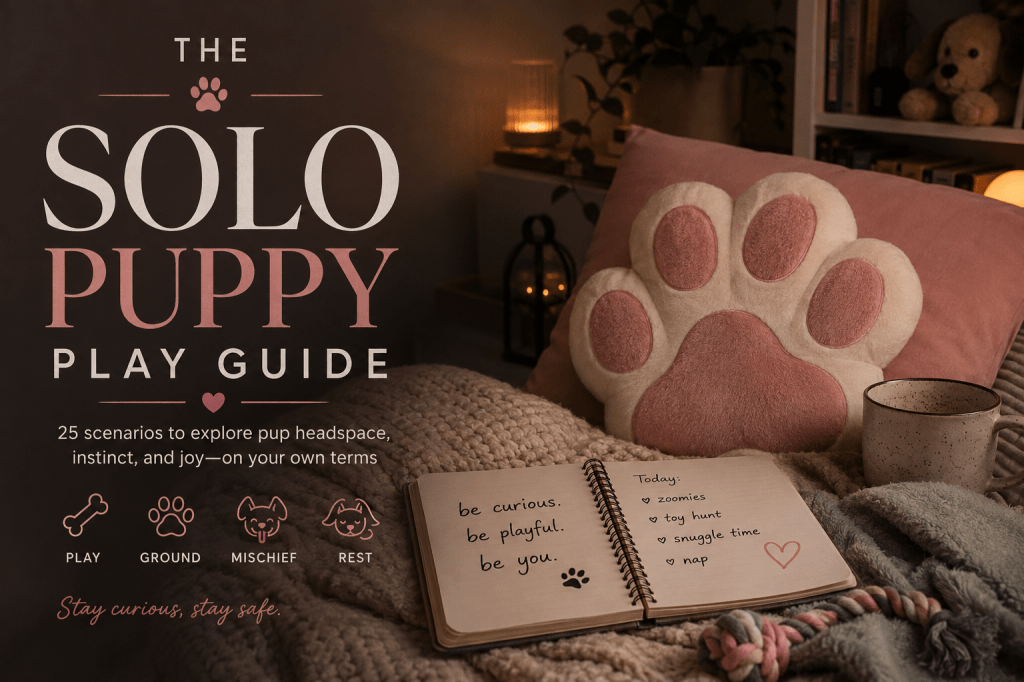
There’s a quiet assumption that runs through a lot of pup play spaces: that the “real” version of this practice requires another person. A handler to guide you, a pack to run with, someone else’s eyes to make the headspace feel earned. I hear this a lot, usually from people who are curious about pup play but feel like they’re locked out of it until they find the right person or the right group.
I don’t think that’s true, and it’s the reason I wrote The Solo Puppy Play Guide.
Headspace Doesn’t Require an Audience
Pup play, at its core, is about identity and sensation , dropping into a state of mind that’s playful, instinctive, and free from the constant self-monitoring that comes with being a fully “on” adult human. A handler can help facilitate that shift, sure. But the shift itself is internal. It’s yours. Waiting for someone else to unlock it for you can mean waiting a long time, and in the meantime, a real part of who you are stays unexplored.
That’s the gap this book tries to close. It’s not a replacement for handler-led play or pack dynamics , those are their own valuable thing. It’s an acknowledgment that solo practice is complete on its own terms, not a lesser version of “the real thing.”
What’s Actually in It
The guide has 25 scenarios, organized into themes: instinctive play, emotional regulation, sensory grounding, mischief, patience, and rest. Each one has a simple setup, a short prompt to get you into the right frame of mind, and a description of the physical actions that carry you through it.
Some of it is high-energy – oh absolutely there’s a scenario built entirely around the “zoomies,” another about stalking a squeaky toy across a dim room. Some of it is much quieter: a scenario about sitting at a window and watching the world go by, another about the specific stillness of drifting off to sleep in headspace. A few lean into playful defiance , stealing a shoe, unraveling a roll of toilet paper, because that mischievous energy is part of what makes pup headspace fun in the first place.
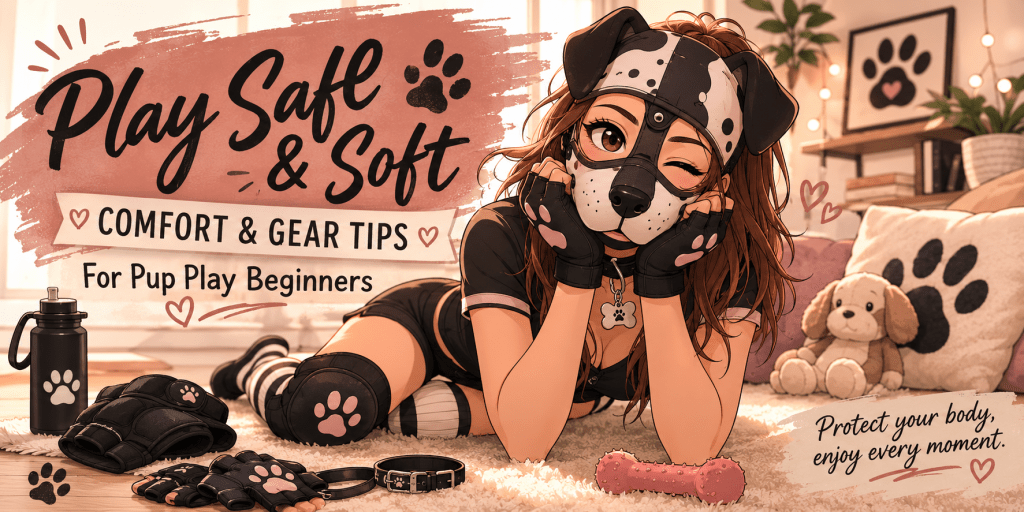
None of it requires special gear. A blanket, a toy, maybe a snack. The point isn’t the equipment. It’s giving your body and your instincts something concrete to do so your mind has permission to follow.
Why I Made It This Way
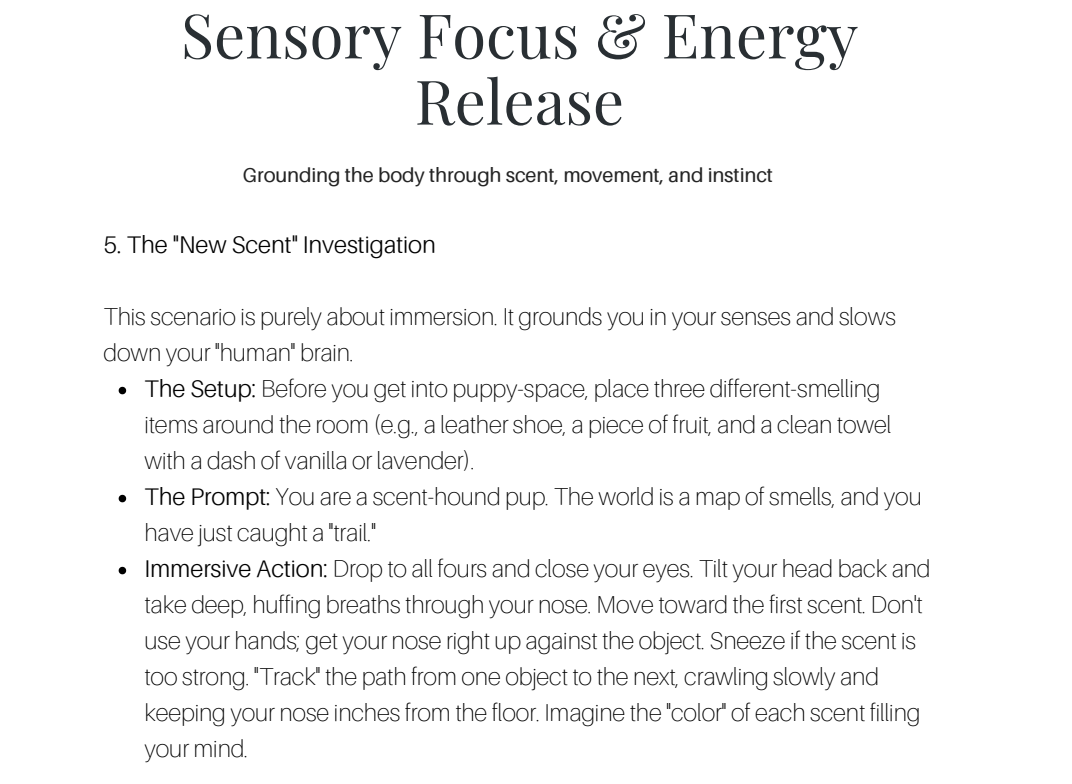
I wanted the scenarios to read less like a checklist and more like small stories you can step into. Each one explains why it works psychologically , what it’s grounding you in, what feeling it’s meant to evoke , so you’re not just following instructions blindly. You can also just take the framework and rewrite it in your own words. If a scenario doesn’t land, change it. If one becomes a favorite and the rest gather dust, that’s completely fine too.
If you’ve been sitting on the edge of exploring pup identity because you didn’t have a handler or a community nearby, I hope this gives you a low-pressure way in. And if you’re already deep into pup play but haven’t tried it solo, I think there’s something worth finding here too , a different kind of trust, the kind you build with yourself.
The Solo Puppy Play Guide is available now from The Kink Archives Etsy shop.
— Stay curious, stay safe.

 The Kink Archives
Plaats een reactie