
Pet play can mean very different things to different people. It can be about power exchange. For others, it’s about play, freedom, headspace, or simply stepping away from everyday expectations for a while.
In this story, Anna shares her experience of discovering pet play, exploring it alone and eventually trying it with a handler.
Introduction
When I first heard about pet play within BDSM, I’ll admit I was confused. Why would someone want to act like an animal? But somehow it caught my attention. The more I learned about it, the more I realized there was something underneath the surface that I hadn’t understood.
Slowly I discovered that pet play offered something I didn’t even know I was searching for: a way to let go of the constant pressure to perform as a “perfect adult.”
The Beginning: Curiosity and Research
I started with research. I’m the type of person who needs to understand something before trying it, so I spent weeks reading articles, watching educational videos, and quietly exploring online forums.
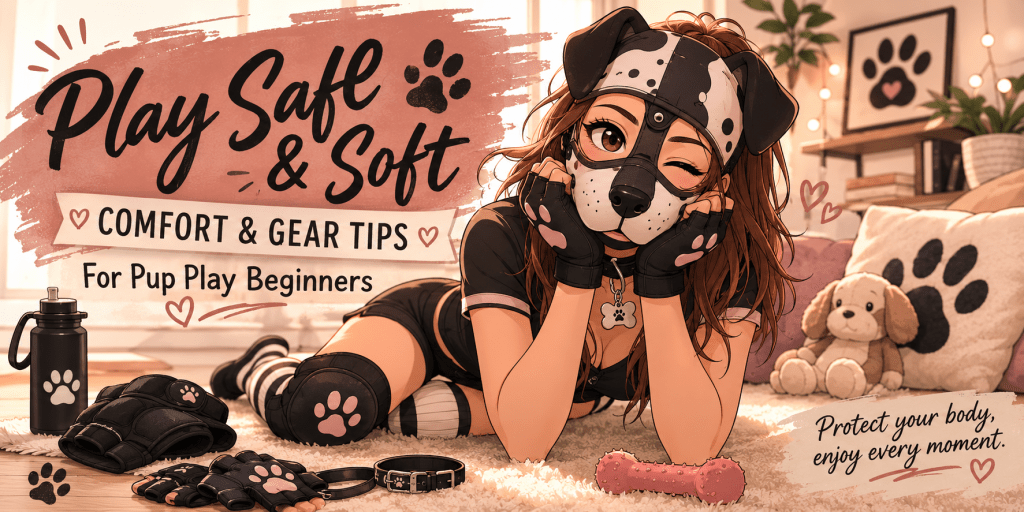
I learned that pet play is a form of role-play where participants take on animal personas, often dogs, cats, foxes and that the experience can look completely different from one person to another.
What surprised me most was learning that pet play doesn’t have to be sexual at all. Many people described it as a way to access a different headspace, reduce stress, explore power dynamics, or simply they get to play.
That was the part that stayed with me.
Taking My First Steps
My first attempt at pet play was actually on my own at home. I felt pretty ridiculous at first and was very aware of what I was doing. I kept thinking that if somebody could see me right now, I’d have a difficult time explaining myself.
I tried to ignore that and carried on for a while. After the initial awkwardness wore off, I started enjoying it. I wasn’t thinking particularly hard about anything. I was just moving around, trying things and seeing what felt natural. It was surprisingly easy to switch off for a bit. That was enough to make me want to try it again, and eventually I became curious about what it would be like with another person involved.
Finding the Right Dynamic
I met someone online who already had some experience with pet play and was interested in being a handler. We talked quite a lot before we actually did anything.
I knew I wanted to try being nonverbal in pet space, so one of the practical things we had to work out was how I would communicate if I didn’t want to speak. We agreed on a few simple hand signals and sounds. We also talked about limits, safewords and what we were both expecting from the dynamic.
At that point I was already fairly sure I wanted to explore being a cat rather than a pup. The independent side of it appealed to me. I liked the idea that I could come looking for attention when I wanted it and wander off again when I’d had enough.
We also discussed aftercare and what would happen if either of us wanted to stop. None of these conversations were particularly exciting, but they meant I wasn’t worrying about those things once we actually started.
My First Scene With a Handler
The first time we tried it, we kept things simple. There were some blankets and toys, and I basically had room to figure out what I wanted to do.
My handler didn’t spend the whole time directing me, which I liked. Sometimes she encouraged me or gave me attention and sometimes she left me alone. I could move around, stretch, play with something or settle down without feeling that I had to constantly “perform” being a cat.
I think that was when pet play started making more sense to me.
Before trying it, I’d imagined I’d constantly be thinking, I’m an adult pretending to be a cat. In reality, after a while I wasn’t thinking about that very much at all. I was simply enjoying what we were doing.
What I’ve Learned
I’ve been exploring pet play for several months now, and one thing I’ve learned is that it’s much less defined than I originally thought.
Trust matters.
I wouldn’t have been comfortable giving someone else that amount of control without knowing that my limits would be respected. Talking beforehand made a big difference.
Everyone seems to do it differently.
For me, it’s mostly about headspace and play. For somebody else it might be much more connected to submission, training, service or a specific dynamic with their handler.
A handler isn’t essential.
I still sometimes explore pet play by myself. It’s different from playing with another person, but I don’t see one as more legitimate than the other.
I don’t worry much about doing it “properly” anymore.
At the beginning I looked at other people and wondered whether I was supposed to behave in a certain way. Eventually I realised that wasn’t particularly useful. If I enjoy being a slightly antisocial cat who wants attention for five minutes and then disappears, that’s fine too.
Where I Am Now
Pet play hasn’t become something I do constantly. Sometimes I’m really in the mood for it and other times I can go quite a while without thinking about it.
What I like most is probably how uncomplicated it can be. I spend enough of normal life thinking about what I need to do next. In pet space, I don’t have to do very much at all.
And yes, I still occasionally think it’s a bit akward. I just don’t think that’s a reason not to enjoy it anymore.
If You’re Curious About Pet Play
If you’re interested in pet play but feel awkward about actually trying it, I’d start small. You don’t need to immediately find a handler or buy a load of gear.
Read about it, see what appeals to you and try a few things on your own if you’d rather not involve somebody else yet. You might find out that you like puppy play, kitten play, another type of pet play, or that the whole thing isn’t actually for you.
If you do decide to explore with someone else, talk first. Discuss limits, safewords, how you’re going to communicate and what you’re both expecting. Especially if you want to be nonverbal, work out how you’ll communicate a problem before you’re in that headspace.
Beyond that, I wouldn’t worry too much about whether you’re doing pet play correctly. I spent far too much time wondering about that at the beginning.
If you’re not sure where to start, The Solo Puppy Play Guide includes 25 guided scenarios designed specifically for exploring pup play on your own.
Explore The Solo Puppy Play Guide →
This story reflects one person’s experience of pet play. Experiences and dynamics differ from person to person. Pet play involving other people should always be consensual, with boundaries and ways to stop or communicate agreed beforehand.
Stay curious, stay safe,
HBJ


 The Kink Archives
Plaats een reactie